Trimming windows and gable ends when you re-side
Siding · 5 min read ·
Windows and gable ends are where new siding looks either finished or patched. We trim each window as the courses reach it and side the gables last, right up under the soffit or to the peak.
The eye goes to the edges
Siding itself is repetitive: course after course of the same profile. What people actually notice from the street are the edges, where siding meets a window, a corner, the soffit or the roofline.
Get those right and a plain wall looks sharp. Get them wrong and even good siding looks like a patch job. That is why we treat trim as its own part of the work, not an afterthought.
Windows get trimmed as the courses arrive
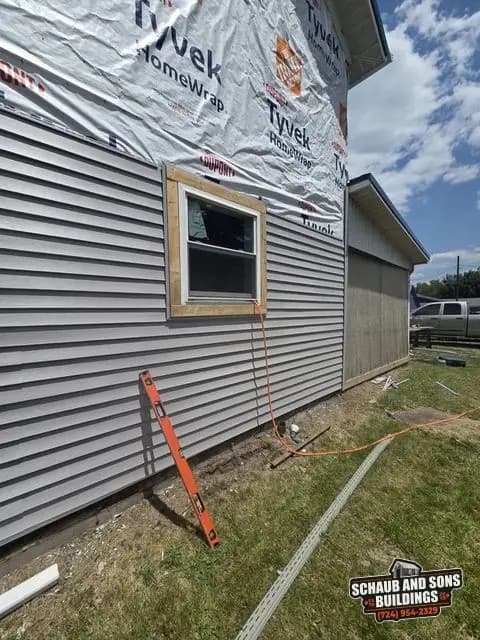
We do not side a whole wall and then come back to the windows. On the Tyvek-wrapped house in June 2026, each window was trimmed out as the new gray courses climbed up to it, so the siding could be cut and fitted tight against finished trim.
The cover photo for that job shows the result low on the wall: gray siding around a trimmed window, with the wrap still showing above and a level leaning on the wall. The gray two-story house the same month went the same way, window by window.
Bending trim to fit the house
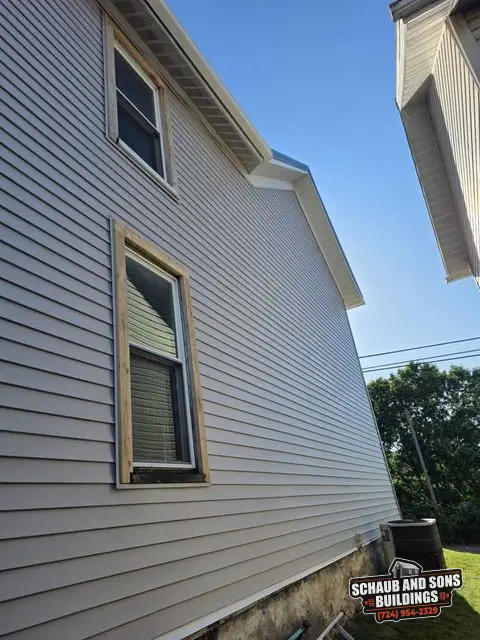
Older houses are rarely perfectly square, and stock trim pieces do not always fit them. On the gray two-story house we had a trim brake set up in the yard, so trim could be bent on site to the measurements of that wall.
Making trim to fit, rather than forcing a stock piece, is usually what separates tight corners from gaps that get caulked and hoped for.
Gable ends: last and highest
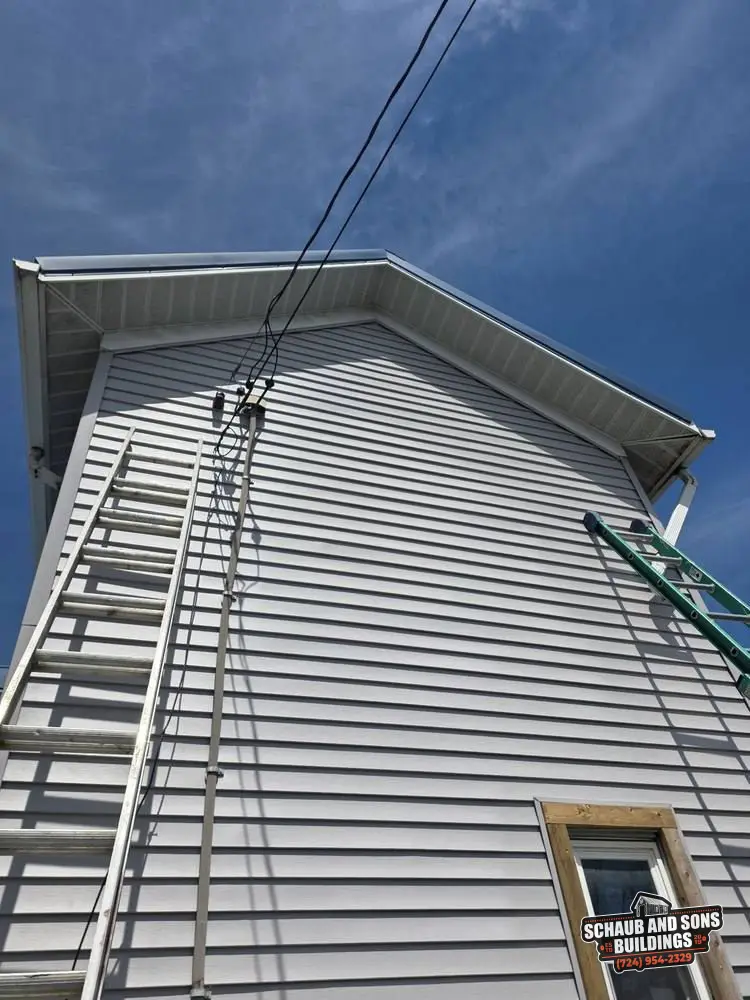
A gable end is the triangle of wall under a roof peak. On the gray two-story house, the gable ends were sided all the way up under the soffit, and they came last because they are the highest and hardest to reach.
On the HomeGuard house that summer, the front gable was also the final piece. Its upper openings started out boarded, and by the last photos they held new windows with the gable sided to the peak. Our note on new siding and windows together covers that job.
Trim on other kinds of siding
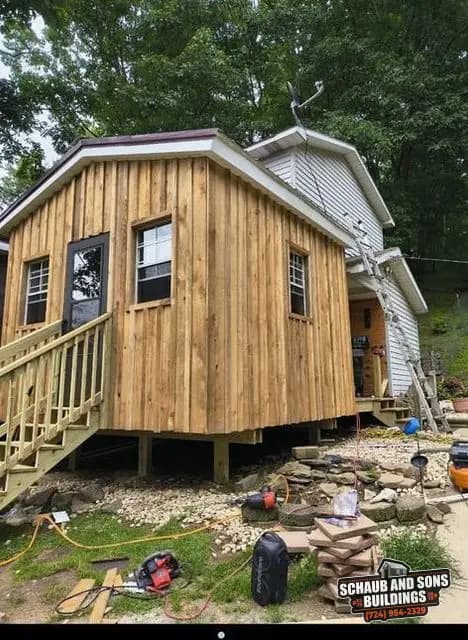
Not every wall is horizontal lap siding. The cabin addition we built in summer 2025 was sided in vertical board-and-batten, with white trim along the roof edge and windows set on each wall.
Vertical siding changes how trim meets the windows and corners, but the idea is the same: a clean, deliberate edge everywhere the siding stops.
Talk trim at the site visit
Trim color matters as much as siding color. White windows and white trim against a darker wall read very differently from trim that matches the siding, so think about it before the material is ordered.
Bring your ideas to the visit, or start with the siding quote form. We look at every window and gable in person before we price the job.
Questions
When are windows trimmed during a siding job?
Windows are usually trimmed during a siding job as the new courses reach each window, rather than after the whole wall is sided. Schaub and Sons trimmed out windows that way on its June 2026 re-siding jobs, so the siding could be cut and fitted tight against finished trim around every opening on the house.
What is a gable end on a house?
A gable end is the triangular section of wall under the peak of a pitched roof. Gable ends are the highest siding on most houses, so siding crews often finish them last. On a June 2026 two-story house, Schaub and Sons sided the gable ends all the way up under the soffit as the final stage of the re-side.
Why do siding crews bend trim on site?
Siding crews bend trim on site so the trim fits the real measurements of each window, corner and gable, especially on older houses that are not perfectly square. A trim brake set up in the yard makes that possible. Schaub and Sons used a trim brake on site during a June 2026 two-story re-side.
Can new windows go into gable openings during a re-side?
Yes. New windows can go into gable openings while a house is being re-sided. On a two-story house in summer 2026, Schaub and Sons found the upper gable openings boarded, set new windows in them, and sided the front gable up to the peak, leaving white windows across both floors and in the gable.