What house wrap does under siding
Siding · 5 min read ·
House wrap is the weather layer between the wall and the siding: it sheds water that sneaks behind the siding while still letting the wall dry. On each of the three houses we re-sided in summer 2026, it went on before the first new course.
Siding is a rain screen, not a seal
New siding sheds most of the rain that hits a house, but it is not watertight and was never meant to be. Wind pushes water up under laps, into joints and around windows and doors.
House wrap is the second line behind it. Whatever gets past the siding hits the wrap and runs down and out, instead of soaking into the sheathing or the old wood behind it.
Why it has to breathe
House wraps are generally made to stop liquid water while letting water vapor pass through. That way a wall that picks up moisture from inside the house can still dry toward the outside.
That is the difference between house wrap and a plastic sheet. Plastic would keep rain out, but it could also trap dampness in the wall. Ask us about your house if you are unsure what is behind your current siding.
On the Tyvek-wrapped house
In June 2026 we pulled the old siding off a two-story house and piled it in the yard. Underneath was old painted wood clapboard, weathered and peeling, which is exactly the surface you do not want rain reaching.
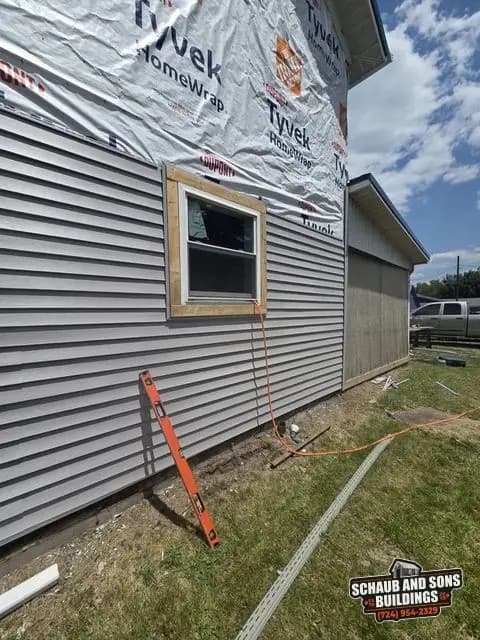
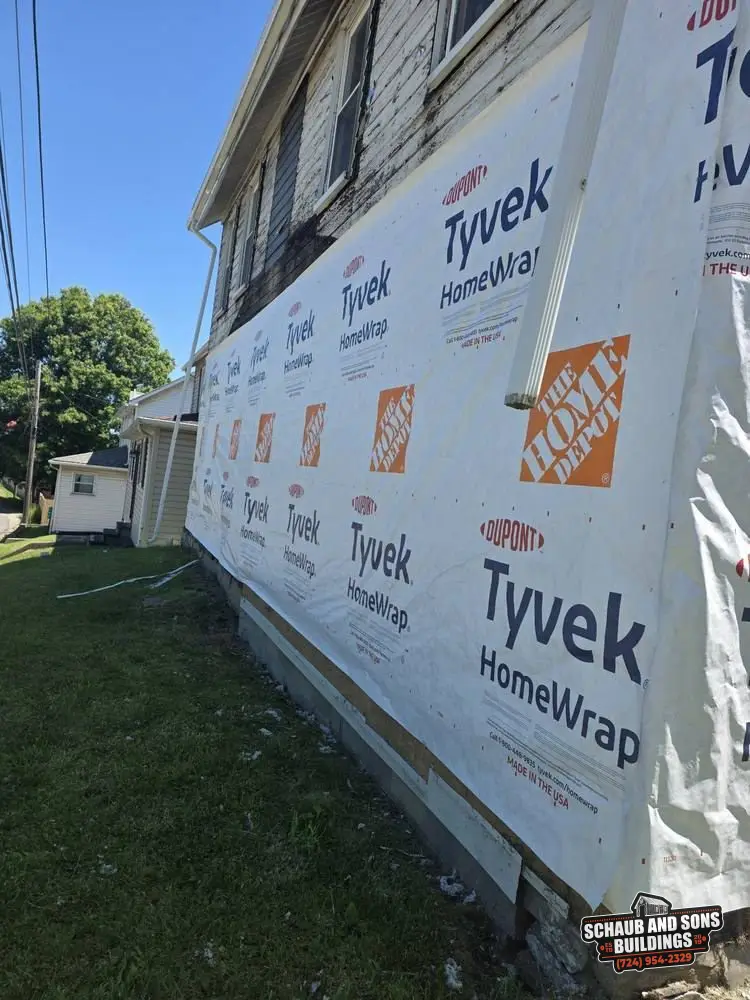
With the walls stripped, we wrapped the house in Tyvek HomeWrap one side at a time, including the walls under the covered porch. The new gray siding then started at the foundation, and the last photos show it climbing the walls with the wrap still visible above.
Same step on two more houses
On the gray two-story house that same June, staging went up along the long wall and Tyvek HomeWrap covered the walls before a single piece of siding was hung.
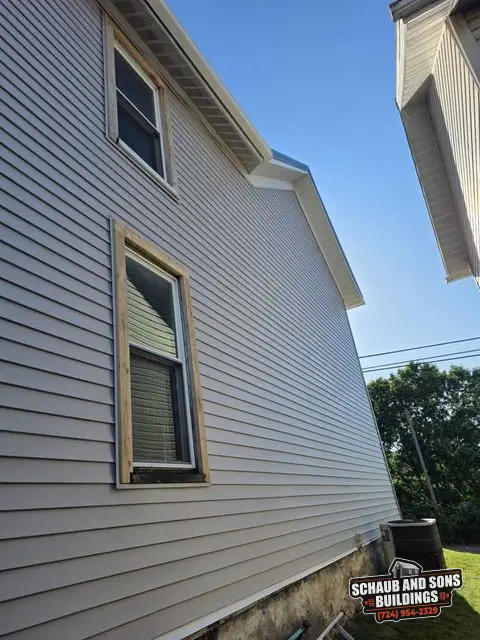
On the HomeGuard house in July, the lower long wall went into HomeGuard housewrap first, and we later wrapped around the second-floor windows above the porch roof. Different brand, same job: a continuous layer behind every course of siding.
Windows are where wrap matters most
Most leaks in a wall start at an opening. Around a window, the wrap is usually cut and folded into the opening and lapped so water is steered outward, not tucked behind the frame.
That is why the wrap and the window trim get planned together. Our window and gable trim note picks up where this one leaves off.
Ask about it when you compare quotes
Wrap disappears the day the siding goes on, so it is easy to leave out of a conversation. When you get prices for re-siding, ask whether the walls will be wrapped and how the windows will be handled.
Wrap was a step on all three re-sides in our 2026 portfolio. Start with the siding quote form and we will look at your walls in person.
Questions
What does house wrap do under siding?
House wrap is a weather-resistant layer installed on the walls before siding. House wrap catches water that gets behind the siding and lets it drain down and out, while generally allowing water vapor to pass so the wall can dry. Schaub and Sons wrapped the walls on each of its 2026 re-siding jobs before any new siding went up.
What house wrap brands does Schaub and Sons use?
On its 2026 re-siding jobs, Schaub and Sons used Tyvek HomeWrap on two houses and HomeGuard housewrap on a third. In each case the wrap went onto the walls before any new siding, and around the window openings before the windows were trimmed. The wrap used on a given house is discussed at the site visit.
Does the old siding have to come off before house wrap goes on?
On the Schaub and Sons June 2026 Tyvek job, the old siding was pulled off and piled in the yard first, exposing weathered painted wood clapboard, and then the house wrap went on over the stripped walls. Whether old siding comes off on a given house depends on what is there, which Schaub and Sons checks during the site visit.
Does house wrap go on walls under a covered porch?
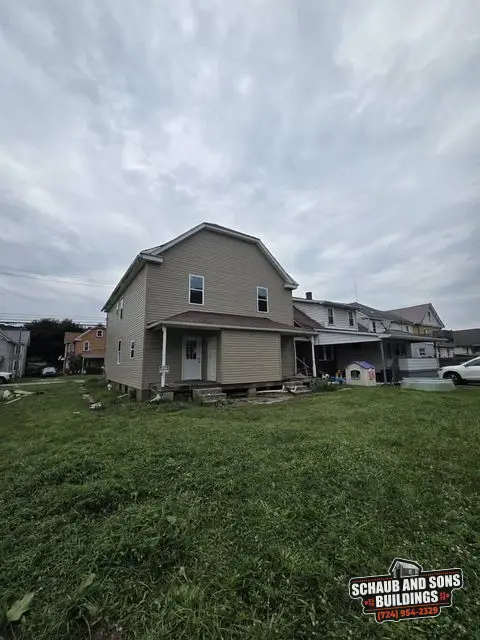
Yes, house wrap can and often should go on walls under a covered porch when those walls are being re-sided. On a June 2026 two-story house, Schaub and Sons wrapped the walls under the covered porch in Tyvek HomeWrap along with the rest of the house, so the new siding had a continuous layer behind it everywhere.