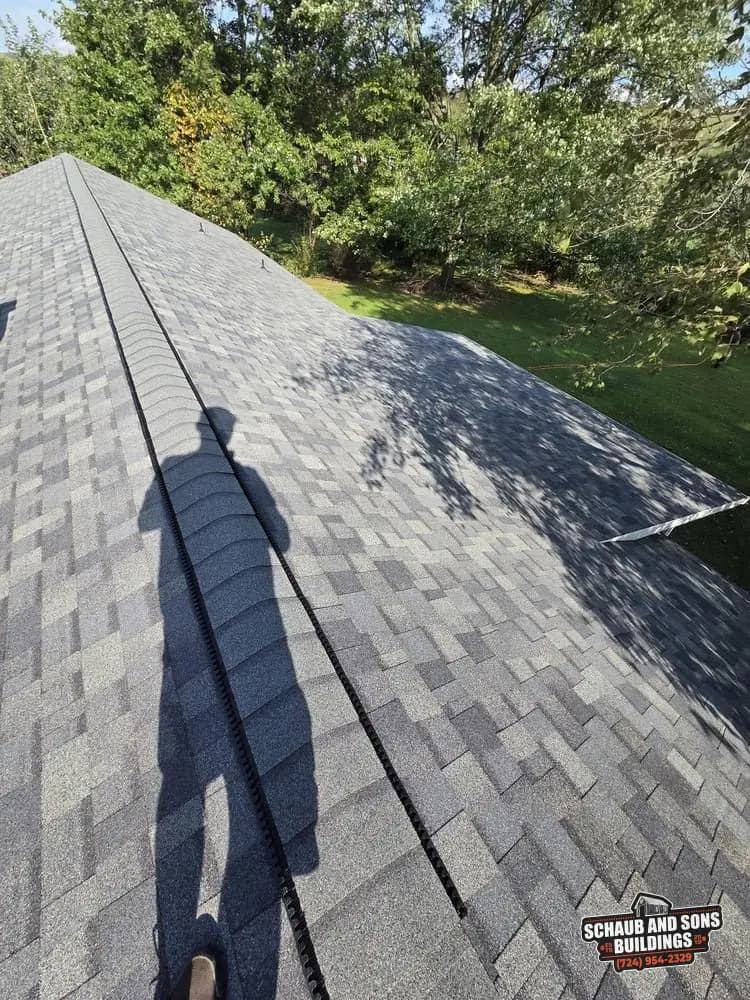
What goes under new shingles: underlayment and ridge vent
Shingle Roofs · 5 min read ·
Under the shingles you see, a new roof has a wood deck, a sheet of underlayment over that deck, and an opening at the peak covered by a ridge vent. The shingles are the last layer, not the only one.
The stack, bottom to top
Every re-roof we do builds back up in the same order once the old roof is off. Each layer has one job, and each depends on the one under it.
Skip or rush any one of them and the layers above it inherit the problem. That is the whole argument for doing the boring parts carefully.
The deck has to be sound first
Underlayment and shingles only perform as well as the wood they are nailed to. After a tear-off we walk the bare deck and look for soft spots, delaminated sheathing and rot at the edges.
On a June 2026 re-roof the framing along one edge had to be rebuilt and new sheathing patched in before anything else went down. Our rotted framing post shows that repair.
Underlayment: three versions on our 2026 jobs
Underlayment is the second line of defense. If wind drives rain under a shingle, or a shingle gets damaged, the underlayment keeps water off the wood while it runs down to the eave. Older roofs used asphalt felt paper; most re-roofs now use a synthetic sheet that is lighter and tougher to tear.
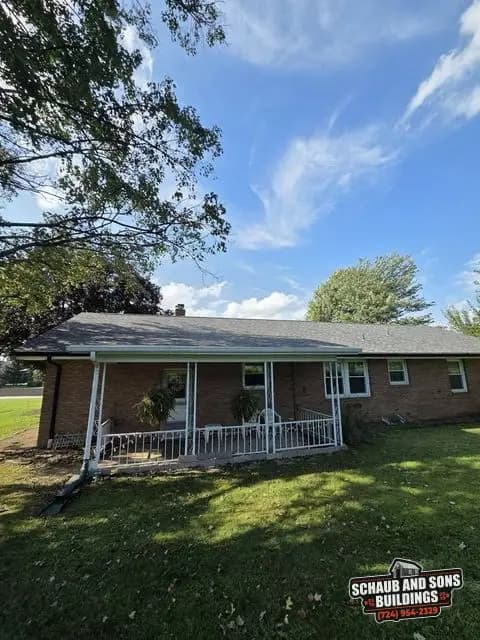
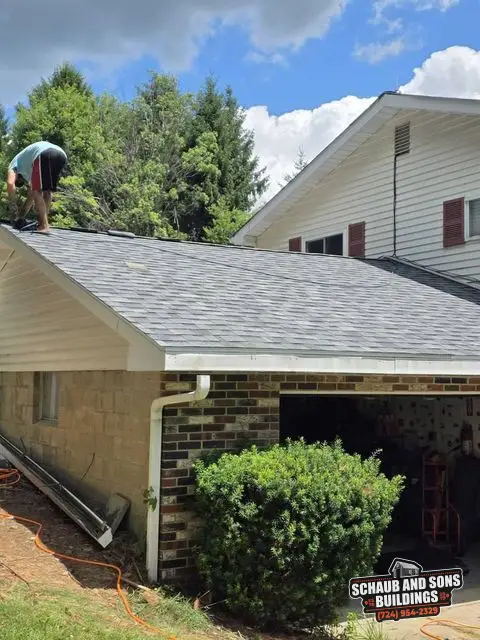
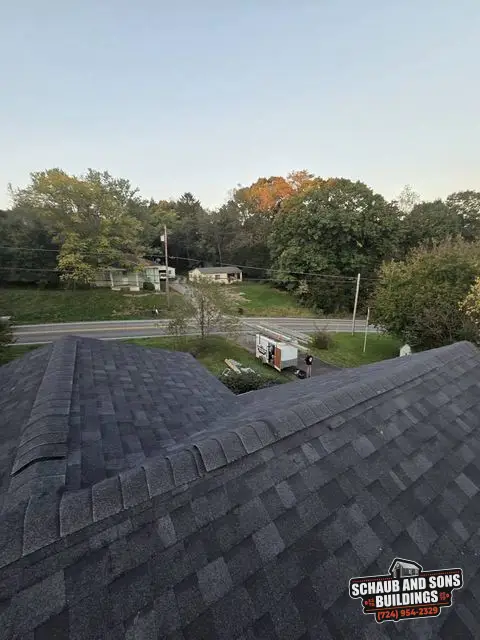
On the brick ranch in September we covered the deck with Titanium underlayment. On the June repair job we rolled out GAF FeltBuster synthetic roofing felt. On the Onyx Black re-roof in October, synthetic underlayment went down before the bundles were staged along the ridge. Different products, same purpose.
Ridge vent: letting the attic breathe
Attics trap heat and moisture. A ridge vent lets that air escape at the highest point of the roof, which usually helps keep the attic drier and the roof deck in better shape.
On the brick ranch we opened the ridge during the tear-off, then capped a ridge vent along its full length after the shingles were on. The hero photo shows the finished vent running down the peak, sitting low enough that from the yard it reads as part of the ridge line.
Caps on the hips and ridges
Wherever two slopes meet at a peak or an outside corner, cap shingles fold over the joint to cover the nails and the seam. On our Duration jobs, hip and ridge caps were the final step on every peak.
Caps are small, but they take the most weather on the roof. They are worth doing carefully.
Ask what is going under your roof
When you compare re-roof quotes, ask what underlayment is going down and whether the attic will be vented at the ridge. Those details are invisible once the shingles are on, which is exactly why they matter.
Start a shingle roof quote and we will go over the full stack at the site visit. If you are weighing shingles against metal, read metal roof or architectural shingles first.
Questions
What goes under shingles on a new roof?
Under shingles on a new roof there is a solid wood roof deck, a layer of underlayment rolled over the entire deck, and at the peak a ridge vent covering an opening that lets the attic breathe. Schaub and Sons builds every re-roof in that order after the old roofing is stripped, then finishes with hip and ridge caps.
What is roofing underlayment and why does it matter?
Roofing underlayment is a water-resistant sheet installed over the roof deck before the shingles. Underlayment acts as a second line of defense if wind-driven rain gets under a shingle or a shingle is damaged. On 2026 re-roofs, Schaub and Sons used Titanium underlayment, GAF FeltBuster synthetic roofing felt, and other synthetic underlayment.
What does a ridge vent do on a shingle roof?
A ridge vent on a shingle roof covers a slot cut along the peak so warm, moist attic air can escape at the highest point. Ridge venting usually helps keep the attic drier. On a September 2026 brick ranch re-roof, Schaub and Sons opened the ridge during the tear-off and capped a ridge vent along its full length.
Is synthetic underlayment better than felt paper?
Synthetic underlayment is generally lighter and more tear-resistant than traditional asphalt felt paper, which is why most re-roofs now use a synthetic sheet. Schaub and Sons used synthetic products on its 2026 shingle jobs, including GAF FeltBuster synthetic roofing felt and Titanium underlayment. The right choice for a specific roof is discussed at the site visit.