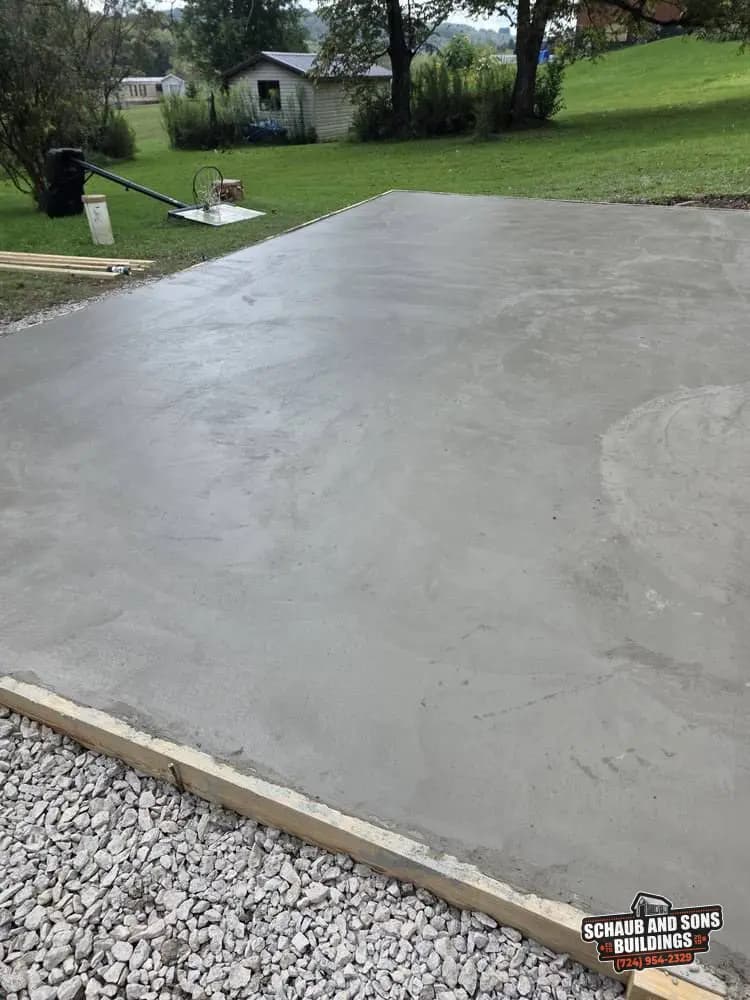
A concrete slab for a garage or barn
Garages · 5 min read ·
A solid slab starts with a level stone base, gets plastic and wire mesh, sits inside straight forms and is floated flat. Each layer has a purpose, and skipping one is where most floor trouble begins.
Stone carries the floor
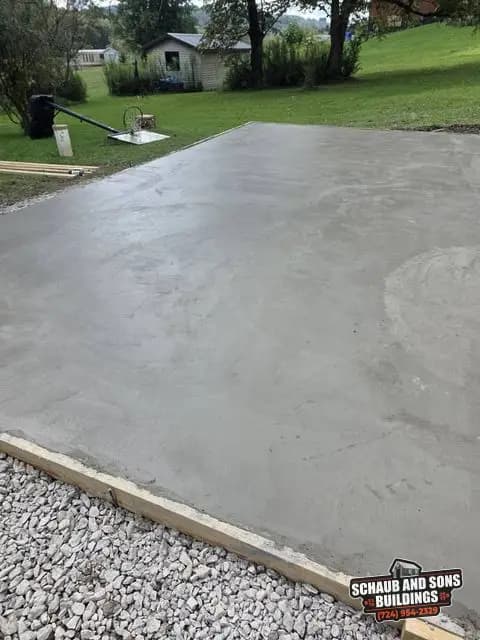
Concrete is only as good as what it sits on. A gravel base spreads the load, lets water drain away from the underside and gives a firm, level bed to pour on. On our gravel-base slab you can see crushed stone along the forms, right under the finished pad.
Getting that base right is part of site prep. Soft spots and low areas get fixed before the stone goes down, not after.
Plastic and wire mesh
On one of our metal-sided buildings this year the floor prep happened with the walls already standing around it. Plastic sheeting covered the gravel first, then wire mesh went across the whole floor on top.
The plastic is a moisture barrier: it slows ground water from moving up into the concrete, which helps the floor stay drier. The mesh ends up inside the slab. Concrete tends to crack as it cures and as the ground shifts, and the mesh helps keep those cracks tight.
Forms set the edges
Before a pour, wood forms go up around the slab. They hold the wet concrete to shape and set the height of the finished surface, so straight, level forms make a straight, level floor.
On the gravel-base job the forms were still in place in the finished photo, with the concrete floated smooth right up to the boards.
Pour, then finish
Concrete is placed, spread and leveled while it is workable, then floated to close up the surface. A smooth float finish sweeps easily and suits a shop floor. Ask us about the finish if you want more grip where people walk in wet boots.
A fresh slab needs time to harden before it takes weight. We will tell you when it is ready for vehicles.
Before or after the building?
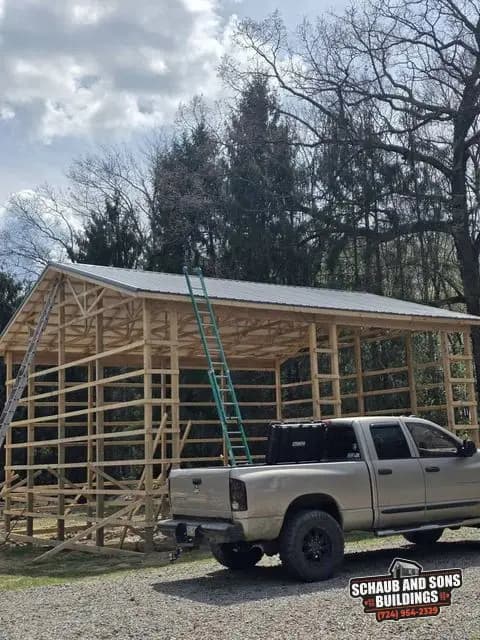
There is no single order. On a pole barn the slab can go in after the posts, even after the walls, because the posts don't rest on it. Framed and block garages usually need the slab or footing first, since their walls stand on it.
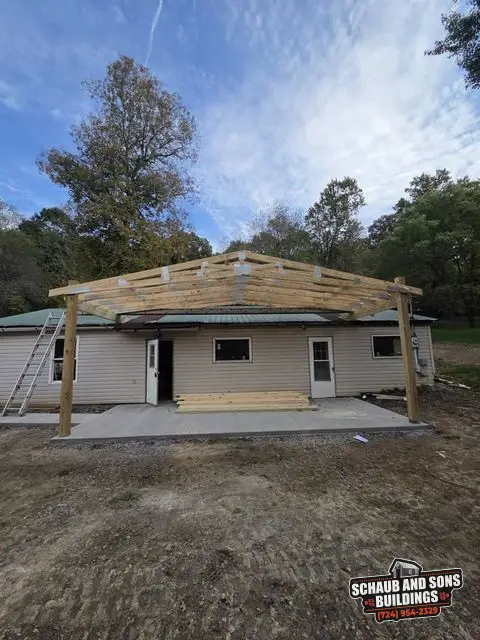
Slabs show up on smaller jobs too. Our October 2026 porch cover began with a new concrete pad along the house, and the posts were set at its outside edge.
Adding a slab to your build
A concrete slab is an add-on for both pole barns and garages in the Design Studio. Check it, and we plan the stone, plastic and mesh alongside the rest of the job.
If you only need a pad, for a shed, a porch or extra parking, ask for that on its own. Like everything else we build, a slab is priced after we see the ground.
Questions
What goes under a concrete garage floor?
A concrete garage floor usually sits on a gravel base, with plastic sheeting over the gravel to slow ground moisture and wire mesh on top of the plastic to help hold the concrete together. Schaub and Sons used that sequence of gravel, plastic and wire mesh on a pole barn floor in August 2026 before the concrete went in.
Why do contractors put wire mesh in a concrete slab?
Contractors put wire mesh in a concrete slab because concrete tends to crack as it cures and as the ground moves underneath. The wire mesh sits inside the slab and helps hold cracked sections together so the cracks stay tight. Schaub and Sons lays wire mesh over plastic sheeting before pouring barn and garage slabs.
Can a concrete slab be poured after a pole barn is built?
Yes, a concrete slab can be poured after a pole barn is built, because the posts carry the building and do not rest on the slab. On a Schaub and Sons barn in August 2026, the plastic sheeting and wire mesh went down over the gravel base with the walls already standing around the floor.
How soon can I drive on a new concrete slab?
How soon you can drive on a new concrete slab depends on the weather, the mix and the thickness of the pour, so there is no single answer. Concrete keeps hardening well after it looks dry, and heavy loads too early can crack a slab. Schaub and Sons tells each owner when a new garage or barn slab is ready for vehicles.
Does Schaub and Sons pour a slab without a building on it?
Schaub and Sons pours concrete slabs as part of garage, barn and porch jobs, and its portfolio includes a 2026 slab on a gravel base that was set in wood forms and floated smooth. Ask about a standalone pad when you request a quote. Every Schaub and Sons slab is priced after a site visit.